Why Some of Our Articles Are Behind a Paywall
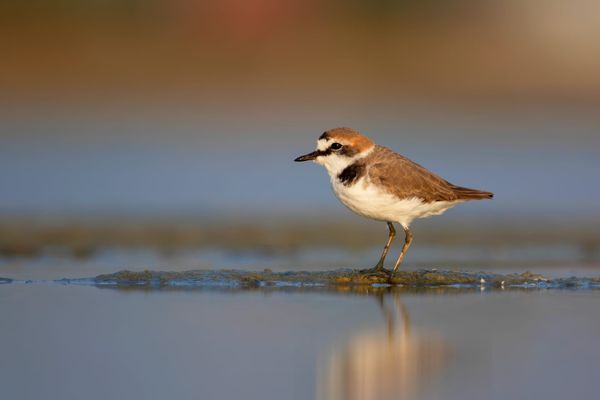
© Gyorgy Szimuly

Why Some of Our Articles Are Behind a Paywall


Share this post

We understand that running into a paywall can be frustrating – especially when you’re genuinely curious about the story behind a headline.

But here’s why we do it.

The Ornithologist is a completely independent publication. We have no advertisers, no corporate backers, and no hidden agenda. Every article we publish – from deep dives into conservation breakthroughs to the latest in bird science – is carefully crafted to be accurate, insightful, and accessible.

This takes time, research, and collaboration with photographers, scientists, and editors. To sustain this work and maintain its quality, we rely on memberships.

For just the price of a cup of coffee each month, readers get full access to the entire magazine – past and present. That includes detailed fieldwork features, research highlights, editorials, and news you won’t find anywhere else, all ad-free and beautifully presented.

If you’re not ready to commit, that’s okay. You can always start with a free membership. It lets you explore selected articles and stay informed about what we’re doing. And if you do choose to support us, you’ll be helping to build a growing platform for bird science and conservation communication.

We’re here to share knowledge – not to hide it. But we also want to do it well, and sustainably.

Thank you for being curious.

CTA Image

Unlock a Month for the Price of a Coffee

Subscribe and Start Reading

Share this post
Comments

Be the first to know

Join our community and get notified about upcoming stories

Subscribing...
You've been subscribed!
Something went wrong
World Curlew Day: The Long Decline of Curlews, Now Fully Understood
Far Eastern Curlew (Numenius madagascariensis) occupying a landscape under pressure, mirroring a wider pattern in which curlews endure but rarely recover despite increasing clarity around their decline © Brendan Tucker

World Curlew Day: The Long Decline of Curlews, Now Fully Understood

Curlews are not disappearing unnoticed. The causes of their decline are now well understood, yet across flyways and landscapes, recovery remains limited and uneven — raising a harder question about the scale and persistence of our response.


Gyorgy Szimuly

Gyorgy Szimuly

What Do Shearwaters Eat? Uncovering a Mediterranean Food Web
The Mediterranean endemic, Yelkouan Shearwater, relies heavily on small pelagic fish such as anchovies and mackerel, linking its fortunes closely to the region’s marine food web. © Jessica Joachim

What Do Shearwaters Eat? Uncovering a Mediterranean Food Web

DNA metabarcoding and stable isotope analysis reveal how two Mediterranean shearwaters share the same prey — and what that overlap tells us about life in a changing marine ecosystem.


Gyorgy Szimuly

Gyorgy Szimuly

Evolution or Plasticity? What the Hermit Thrush Reveals About Climate Change
Long regarded as stable, the Hermit Thrush now reveals how environmental change can leave measurable imprints on form and function. © Mark Daly

Evolution or Plasticity? What the Hermit Thrush Reveals About Climate Change

Over four decades, a familiar North American songbird has grown smaller. But genomic evidence reveals that not all of these changes are evolutionary – some may simply reflect the remarkable plasticity of living organisms in a warming world.


Gyorgy Szimuly

Gyorgy Szimuly

Fabricated Birds: AI and the Future of Ornithology
AI-generated image. A Shoebill (Balaeniceps rex) in papyrus habitat. The bird depicted here does not exist – a reminder that in the age of generative imagery, realism is no longer proof of presence. Image created by Daniel Szimuly/The Ornithologist. All rights reserved.

Fabricated Birds: AI and the Future of Ornithology

When we generated a Shoebill that never existed, the realism was flawless – and unsettling. In an age where synthetic plausibility becomes effortless, ornithology must reconsider what authenticity means and how it is protected.


Gyorgy Szimuly

Gyorgy Szimuly