The Ornithologist Launches ‘Conceptual Notes’: Exploring the Unanswered Questions in Ornithology
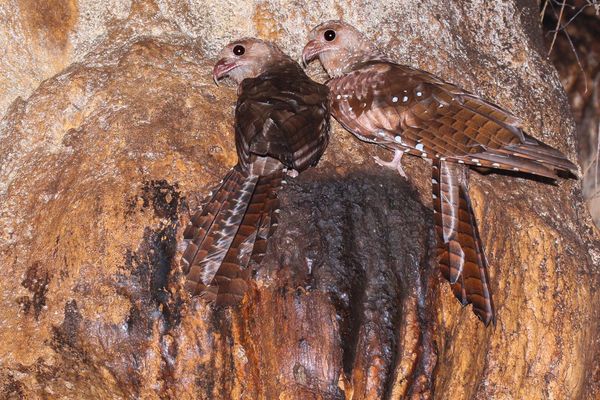
Oilbirds (Steatornis caripensis), among the few birds to use echolocation. Their nocturnal world challenges the assumption that birds are primarily visual animals – a fitting emblem for a series that explores what lies beyond familiar explanatory light. © Alex Berryman

The Ornithologist Launches ‘Conceptual Notes’: Exploring the Unanswered Questions in Ornithology


Share this post

The Ornithologist has launched a new editorial series titled Conceptual Notes, designed to give space to questions, uncertainties, and unresolved patterns that sit just beyond the boundaries of conventional scientific publishing.

The series responds to a familiar tension in ornithology and ecology: while journals excel at reporting methods, results, and conclusions, there is far less room to discuss the moments before hypotheses solidify, or the ambiguities that persist even after decades of research. Conceptual Notes aims to occupy that gap – not as speculation, but as disciplined reflection grounded in evidence and field experience.

Rather than presenting new datasets or definitive answers, each Conceptual Note outlines what is currently supported by research, then deliberately turns toward what remains unclear, contested, or insufficiently explored. The intention is not to undermine established knowledge, but to treat uncertainty as a productive component of scientific thinking rather than something to be edited out.

The first published notes, including a reflection on woodpecker signalling and a discussion of naming conventions in the European Roller, illustrate this approach. Each piece is anchored in established research, careful in its claims, and explicit about the limits of current understanding.

Conceptual Notes is not positioned as an opinion column, nor as a substitute for peer-reviewed literature. Instead, it is conceived as a complementary space – one that may be useful to researchers, field ornithologists, and advanced birders alike, particularly those interested in theory formation, interpretation, and the framing of future research questions.

By launching this series, The Ornithologist continues to expand its role beyond science communication alone, positioning itself as a platform where ornithological thinking – not only results – can be shared, tested, and refined. Researchers and practitioners are invited to engage with the series, whether as readers, contributors, or critical interlocutors.

If you would like to follow the series or contribute to future Conceptual Notes, please visit the dedicated page or get in touch directly.

Explore
The Thousand Birder Circle

The Ornithologist logo

If you value thoughtful writing about birds and the ideas behind it, you may wish to explore The Thousand Birder Circle.

Explore the Circle

Share this post
Comments

Be the first to know

Join our community and get notified about upcoming stories

Subscribing...
You've been subscribed!
Something went wrong
The Art of Recognition: Firefinch Reframes the Path to Becoming an Ornithologist
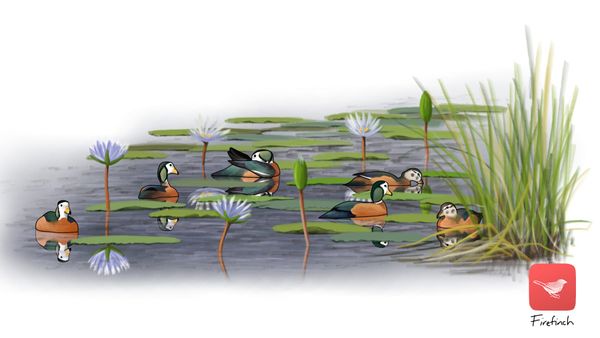
Unlike photography, illustration allows repeated field impressions to be compressed into a single scene — combining posture, behaviour, habitat, and the way a species is most often remembered by observers in the field. Cotton Pygmy Geese illustrated by Faansie Peacock for Firefinch. © Firefinch / Faansie Peacoc

The Art of Recognition: Firefinch Reframes the Path to Becoming an Ornithologist

Birding apps usually promise speed, certainty, and instant answers. Firefinch moves in another direction entirely – towards attention, illustration, and the slower process of learning how to truly recognise birds.


Gyorgy Szimuly

Gyorgy Szimuly

World Curlew Day: The Long Decline of Curlews, Now Fully Understood
Far Eastern Curlew (Numenius madagascariensis) occupying a landscape under pressure, mirroring a wider pattern in which curlews endure but rarely recover despite increasing clarity around their decline © Brendan Tucker

World Curlew Day: The Long Decline of Curlews, Now Fully Understood

Curlews are not disappearing unnoticed. The causes of their decline are now well understood, yet across flyways and landscapes, recovery remains limited and uneven — raising a harder question about the scale and persistence of our response.


Gyorgy Szimuly

Gyorgy Szimuly

What Do Shearwaters Eat? Uncovering a Mediterranean Food Web
The Mediterranean endemic, Yelkouan Shearwater, relies heavily on small pelagic fish such as anchovies and mackerel, linking its fortunes closely to the region’s marine food web. © Jessica Joachim

What Do Shearwaters Eat? Uncovering a Mediterranean Food Web

DNA metabarcoding and stable isotope analysis reveal how two Mediterranean shearwaters share the same prey — and what that overlap tells us about life in a changing marine ecosystem.


Gyorgy Szimuly

Gyorgy Szimuly

Evolution or Plasticity? What the Hermit Thrush Reveals About Climate Change
Long regarded as stable, the Hermit Thrush now reveals how environmental change can leave measurable imprints on form and function. © Mark Daly

Evolution or Plasticity? What the Hermit Thrush Reveals About Climate Change

Over four decades, a familiar North American songbird has grown smaller. But genomic evidence reveals that not all of these changes are evolutionary – some may simply reflect the remarkable plasticity of living organisms in a warming world.


Gyorgy Szimuly

Gyorgy Szimuly