Farewell to Solstice: The Last Stewart Island Kākāpō Passes Away
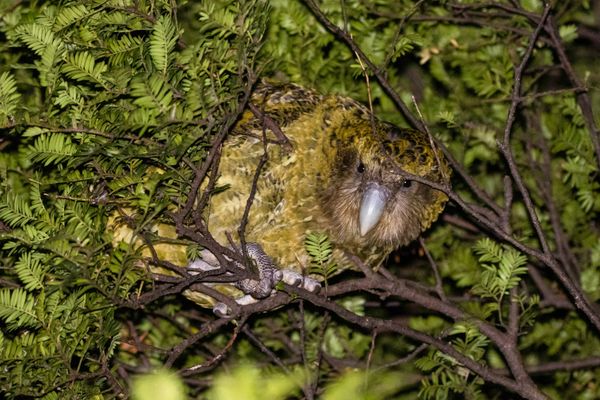
Kākāpō conservation remains one of New Zealand’s most intensive recovery missions — a reminder of what has been saved, and what could still be lost. © Oscar Thomas

Farewell to Solstice: The Last Stewart Island Kākāpō Passes Away


Share this post

Solstice, the final female kākāpō originally from Stewart Island, passed away in Dunedin after several months of treatment for cloacitis – a recurring disease that has claimed several individuals in recent years. Her death has resonated deeply among conservationists who have followed her story for nearly three decades.

First discovered in 1997, Solstice was found against all odds – years after her species had been declared locally extinct on Stewart Island. At that time, the last known kākāpō had been translocated to predator-free offshore sanctuaries to secure the species’ survival. Yet Solstice’s rediscovery proved that not all had been lost.

Rediscovered against all odds
In the early 1990s, biologists believed the Stewart Island kākāpō population had vanished. A 1993 survey hinted that a few individuals might still roam the remote Tin Range. When new funding finally arrived in 1997, a search team, aided by dogs, scoured the rugged terrain. What they found exceeded expectations – a lone female, later named Solstice, who had survived unaided for years in the wild.

Her discovery was hailed as one of the most poignant moments in the species’ recovery programme – proof of the extraordinary endurance of a bird that had once numbered fewer than 50 individuals.

A matriarch of the modern kākāpō
Solstice went on to contribute vital genetic material to the recovering population. She produced chicks, grand-chicks, and even great-grand-chicks, helping to diversify the gene pool of one of the world’s rarest parrots. She was also among the first females to undergo artificial insemination – a landmark in the management of the species’ breeding programme.
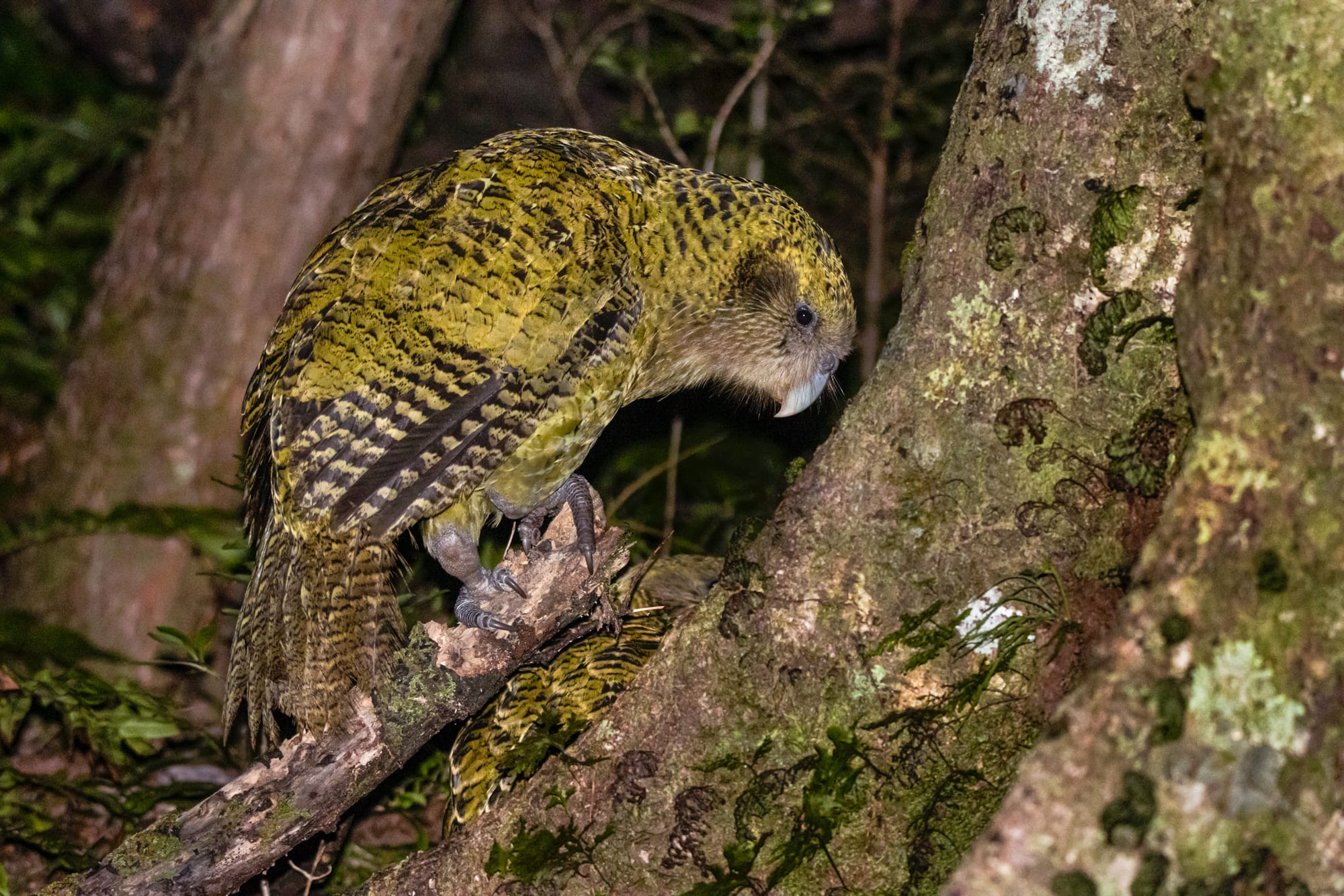
Monitoring continues across New Zealand’s offshore sanctuary islands, where the small Kākāpō population is managed for long-term survival. © Oscar Thomas

Today, just 24 of the original founder birds remain alive. The population as a whole has climbed to 237 individuals, thanks to intensive management by the Kākāpō Recovery Programme, but Solstice’s passing serves as a reminder of how fragile this success remains.

A shared legacy
“Solstice’s story has always reminded us of what we nearly lost – and what dedicated people can bring back,” said Dr Andrew Digby, science advisor to the Kākāpō Recovery Programme, who shared news of her passing.

Her loss, though expected after months of care, has brought reflection across New Zealand’s conservation community. For many, Solstice represented both a living link to the Stewart Island lineage and a symbol of the species’ will to endure despite isolation and disease.

Looking forward
As the kākāpō continues its recovery, genetic management and disease prevention remain critical. Cloacitis, which contributed to Solstice’s decline, is still a recurring concern, requiring constant veterinary oversight. Researchers continue to refine husbandry and breeding protocols to reduce such risks.

The hope is that Solstice’s descendants – now integrated into the broader population – will carry forward her legacy and preserve a trace of the Stewart Island heritage she embodied.

The Thousand Birder Circle

The Ornithologist logo

If you value thoughtful writing about birds and the ideas behind it, you may wish to explore The Thousand Birder Circle.

Explore the Circle

References

Department of Conservation (2024). Kākāpō Recovery Programme Annual Report.

The Ornithologist Academy

Founder Birds

Founder birds are the individuals that form the genetic starting point of a recovering or reintroduced population. In the case of the kākāpō, the entire living population descends from a small number of surviving adults discovered during rescue efforts in the 1970s–1990s.

Why founders matter: Every founder carries a unique combination of genetic material. When only a few founders remain, the genetic future of the species becomes tightly linked to the diversity contained within those individuals. This is why each bird’s lineage is so valuable.

The kākāpō example: Today’s kākāpō population – now more than 250 birds – still originates from just two dozen founders. Solstice was one of them through her Stewart Island lineage, meaning her offspring represent genetic traits no other line can replace.

Genetic challenges: A population built from so few ancestors is vulnerable to inbreeding, disease susceptibility, and the loss of rare traits. This is why the recovery programme relies on tools such as pedigree analysis, genetic screening, and selective pairing.

Why it matters: Understanding founders helps explain why every individual kākāpō is monitored so closely. Each one plays an outsized role in shaping the species’ long-term viability, and the loss of a founder can alter the genetic path of the entire population.


Share this post
Comments

Be the first to know

Join our community and get notified about upcoming stories

Subscribing...
You've been subscribed!
Something went wrong
World Curlew Day: The Long Decline of Curlews, Now Fully Understood
Far Eastern Curlew (Numenius madagascariensis) occupying a landscape under pressure, mirroring a wider pattern in which curlews endure but rarely recover despite increasing clarity around their decline © Brendan Tucker

World Curlew Day: The Long Decline of Curlews, Now Fully Understood

Curlews are not disappearing unnoticed. The causes of their decline are now well understood, yet across flyways and landscapes, recovery remains limited and uneven — raising a harder question about the scale and persistence of our response.


Gyorgy Szimuly

Gyorgy Szimuly

What Do Shearwaters Eat? Uncovering a Mediterranean Food Web
The Mediterranean endemic, Yelkouan Shearwater, relies heavily on small pelagic fish such as anchovies and mackerel, linking its fortunes closely to the region’s marine food web. © Jessica Joachim

What Do Shearwaters Eat? Uncovering a Mediterranean Food Web

DNA metabarcoding and stable isotope analysis reveal how two Mediterranean shearwaters share the same prey — and what that overlap tells us about life in a changing marine ecosystem.


Gyorgy Szimuly

Gyorgy Szimuly

Evolution or Plasticity? What the Hermit Thrush Reveals About Climate Change
Long regarded as stable, the Hermit Thrush now reveals how environmental change can leave measurable imprints on form and function. © Mark Daly

Evolution or Plasticity? What the Hermit Thrush Reveals About Climate Change

Over four decades, a familiar North American songbird has grown smaller. But genomic evidence reveals that not all of these changes are evolutionary – some may simply reflect the remarkable plasticity of living organisms in a warming world.


Gyorgy Szimuly

Gyorgy Szimuly

Fabricated Birds: AI and the Future of Ornithology
AI-generated image. A Shoebill (Balaeniceps rex) in papyrus habitat. The bird depicted here does not exist – a reminder that in the age of generative imagery, realism is no longer proof of presence. Image created by Daniel Szimuly/The Ornithologist. All rights reserved.

Fabricated Birds: AI and the Future of Ornithology

When we generated a Shoebill that never existed, the realism was flawless – and unsettling. In an age where synthetic plausibility becomes effortless, ornithology must reconsider what authenticity means and how it is protected.


Gyorgy Szimuly

Gyorgy Szimuly