How European Is the European Roller?
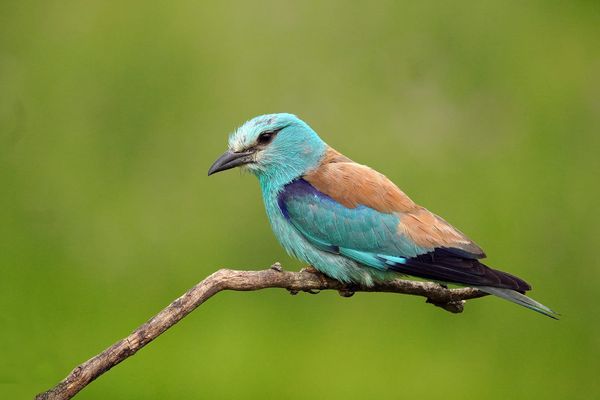
European Roller in Hungary — a bird still closely associated with Europe by name, even as much of its population and range now lie far beyond the continent’s western edge. © Attila Szilágyi

How European Is the European Roller?


Share this post
Conceptual Note: This piece sits deliberately between observation and explanation: it outlines what is currently supported by evidence, then turns to the not knowing that remains — treating uncertainty not as a failure of understanding, but as a necessary part of how knowledge advances.

The European Roller carries one of the most self-assured names in ornithology. It sounds precise, settled, geographically honest. Yet the bird it describes has always been only partly European – and increasingly so in name alone. Its modern breeding strongholds lie far beyond the continent that claims it, stretching deep into Central Asia, while large parts of its former western range have steadily thinned or vanished.

Ringing recoveries expose this mismatch clearly. Birds breeding in western and central Europe (Coracias garrulus garrulus) overwhelmingly winter in southern Africa, following a long-established south-western axis. The eastern subspecies (Coracias garrulus semenowi), breeding from the eastern Mediterranean through Central Asia, follows a different migratory logic, wintering mainly in eastern and southern Africa. These are not minor deviations but persistent, population-level patterns shaped by geography and historical separation.

Genetic studies reinforce the divide. While the two subspecies are not deeply split in evolutionary terms, measurable genetic differentiation exists, consistent with limited gene flow and partially independent demographic histories. Morphologically, however, the Roller offers little assistance: the subspecies differ only subtly, with broad overlap in size and plumage, leaving movement and genetics to carry most of the signal.
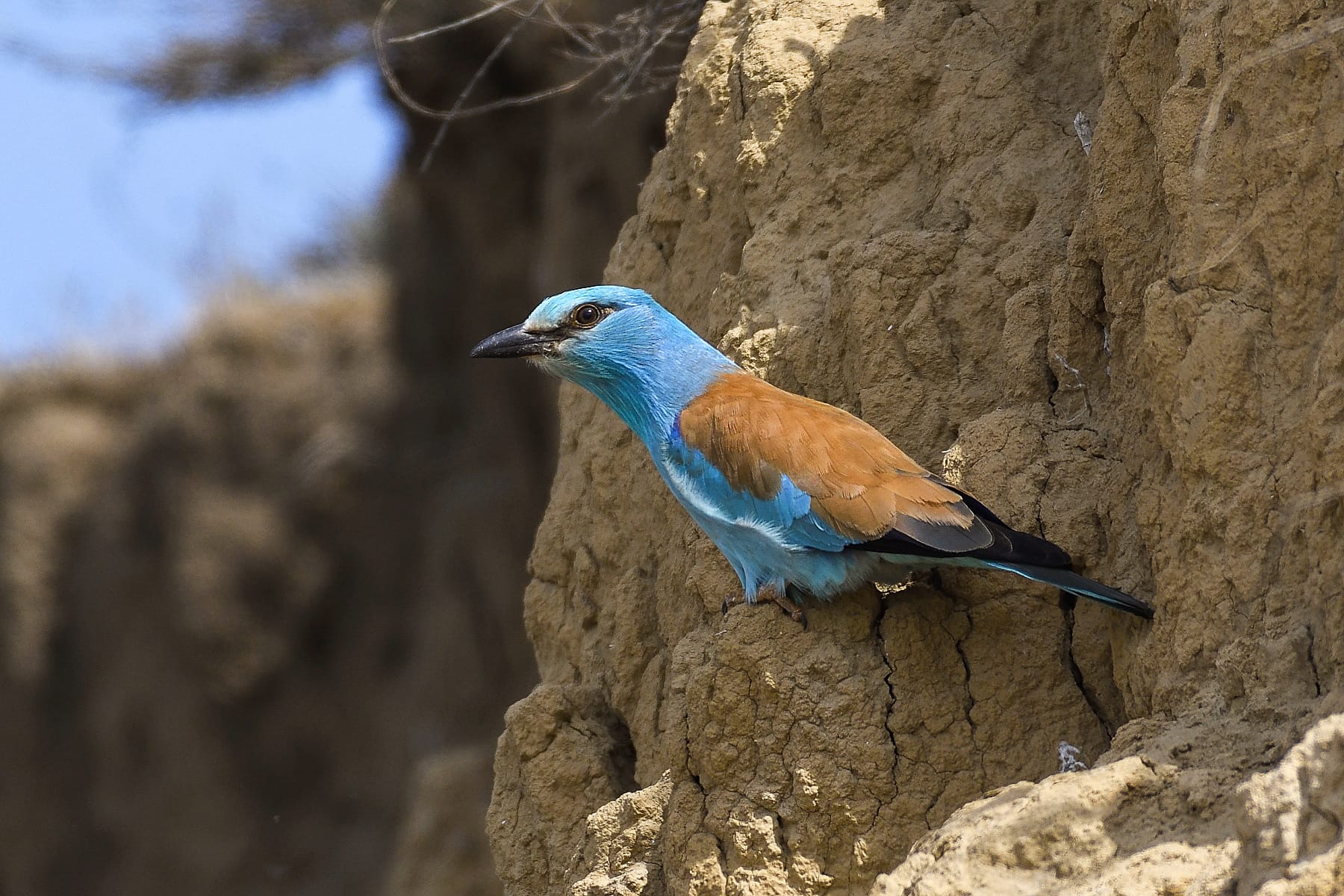
European Roller photographed in southwestern Ukraine (Odes’ka Oblast’) — a region close to the proposed subspecies transition, where photographic appearance alone offers limited guidance to the observer. © Oleksandr Nastachenko

What further unsettles the name is scale. Conservative reconstructions suggest that the eastern subspecies likely accounts for roughly 60–70% of the global population, despite being far less intensively monitored – a proportion that may well be higher given the near absence of large-scale survey effort across much of its range. In effect, the demographic centre of the species lies east of the place its name implies.

Names, however, outlast distributions. They preserve former baselines and familiar narratives long after landscapes have changed. In the Roller’s case, “European” increasingly describes an origin story rather than a present condition – a linguistic anchor tied to a geography the species no longer fully occupies.

Perhaps the more interesting exercise is not defending the name, but asking what we would choose if the species were introduced to us now.

The Thousand Birder Circle

The Ornithologist logo

If you value thoughtful writing about birds and the ideas behind it, you may wish to explore The Thousand Birder Circle.

Explore the Circle

Share this post
Comments

Be the first to know

Join our community and get notified about upcoming stories

Subscribing...
You've been subscribed!
Something went wrong
The Art of Recognition: Firefinch Reframes the Path to Becoming an Ornithologist
Unlike photography, illustration allows repeated field impressions to be compressed into a single scene — combining posture, behaviour, habitat, and the way a species is most often remembered by observers in the field. Cotton Pygmy Geese illustrated by Faansie Peacock for Firefinch. © Firefinch / Faansie Peacoc

The Art of Recognition: Firefinch Reframes the Path to Becoming an Ornithologist

Birding apps usually promise speed, certainty, and instant answers. Firefinch moves in another direction entirely – towards attention, illustration, and the slower process of learning how to truly recognise birds.


Gyorgy Szimuly

Gyorgy Szimuly

World Curlew Day: The Long Decline of Curlews, Now Fully Understood
Far Eastern Curlew (Numenius madagascariensis) occupying a landscape under pressure, mirroring a wider pattern in which curlews endure but rarely recover despite increasing clarity around their decline © Brendan Tucker

World Curlew Day: The Long Decline of Curlews, Now Fully Understood

Curlews are not disappearing unnoticed. The causes of their decline are now well understood, yet across flyways and landscapes, recovery remains limited and uneven — raising a harder question about the scale and persistence of our response.


Gyorgy Szimuly

Gyorgy Szimuly

What Do Shearwaters Eat? Uncovering a Mediterranean Food Web
The Mediterranean endemic, Yelkouan Shearwater, relies heavily on small pelagic fish such as anchovies and mackerel, linking its fortunes closely to the region’s marine food web. © Jessica Joachim

What Do Shearwaters Eat? Uncovering a Mediterranean Food Web

DNA metabarcoding and stable isotope analysis reveal how two Mediterranean shearwaters share the same prey — and what that overlap tells us about life in a changing marine ecosystem.


Gyorgy Szimuly

Gyorgy Szimuly

Evolution or Plasticity? What the Hermit Thrush Reveals About Climate Change
Long regarded as stable, the Hermit Thrush now reveals how environmental change can leave measurable imprints on form and function. © Mark Daly

Evolution or Plasticity? What the Hermit Thrush Reveals About Climate Change

Over four decades, a familiar North American songbird has grown smaller. But genomic evidence reveals that not all of these changes are evolutionary – some may simply reflect the remarkable plasticity of living organisms in a warming world.


Gyorgy Szimuly

Gyorgy Szimuly