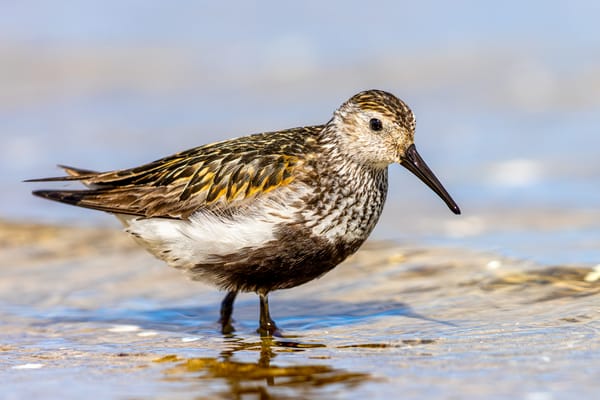
Running on Empty: How a Dunlin Crossed Europe Without Reserves
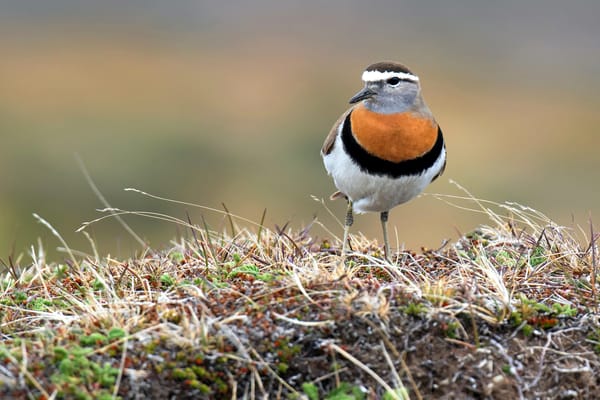
Even when fat and muscle scores read ‘zero’, a Dunlin’s body carries hidden strategies to keep it moving. © Wojciech Janecki

Running on Empty: How a Dunlin Crossed Europe Without Reserves

A Dunlin, colour-marked in northwest Hungary, with “zero fat, zero muscle” was photographed in Spain just 13 days later. The journey isn’t record-breaking – but the physiology that makes it possible is.

Share this post
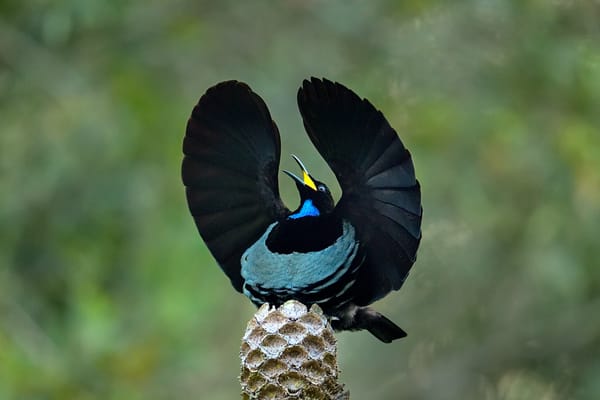
Engineering Elegance: The Paradise Riflebird As Nature’s Most Theatrical Engineer
A male Victoria’s Riflebird in full theatrical flair, arching his jet-black wings and iridescent breast shield as he engineers a multisensory courtship spectacle – each gesture finely tuned by evolution to captivate the discerning female. This species shares the same extraordinary display mechanics described in recent Paradise Riflebird research. © Paul Maury 

Engineering Elegance: The Paradise Riflebird As Nature’s Most Theatrical Engineer

With a wave of his wings and the snap of a feather, the Paradise Riflebird transforms the rainforest floor into a stage. Recent research reveals that this avian dancer doesn’t just display beauty – it performs biomechanics at its evolutionary peak.


The Ornithologist
The Ornithologist

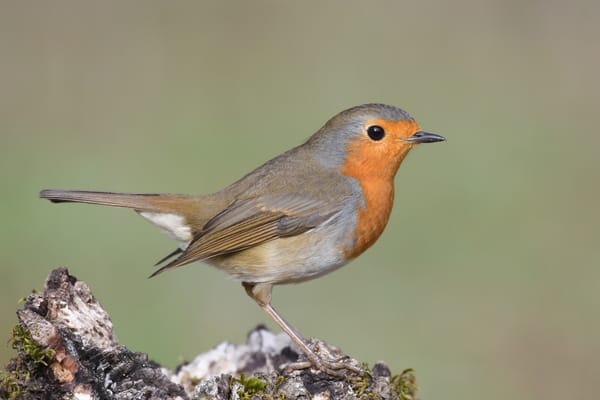
Sound-based surveys uncover fine-scale habitat selection in the declining Crested Tit
Forest birds are often assumed to depend primarily on age and maturity, yet fine-scale structure and composition may shape habitat use long before breeding begins. © Steve Roach

Sound-based surveys uncover fine-scale habitat selection in the declining Crested Tit

New research from Finland suggests that Crested Tits respond more to fine-scale forest structure than to forest age in early spring, challenging assumptions about how habitat quality is defined in managed boreal forests.


Gyorgy Szimuly

Gyorgy Szimuly

Choosing Survival: Habitat Shifts in Wintering Taiga Bean Geese
Winter landscapes can appear rich in food, yet a few degrees below zero can render familiar feeding grounds unusable. For Taiga Bean Geese, survival depends on recognising when to abandon frozen pastures and seek alternative refuges. © Lars Petersson

Choosing Survival: Habitat Shifts in Wintering Taiga Bean Geese

When frost locks grasslands out of reach, Taiga Bean Geese turn to winter cereal fields to survive. New research shows how these fields become lifelines during the coldest days of winter.


Gyorgy Szimuly

Gyorgy Szimuly

Bound by Coastlines: Genetics and the Hidden Structure of Mexico’s American Oystercatchers
American Oystercatchers along the coast of north-western Mexico inhabit a landscape shaped by strong site fidelity, where breeding populations remain closely tied to specific bays and shorelines despite their ability to travel long distances.© Rain Saulnier

Bound by Coastlines: Genetics and the Hidden Structure of Mexico’s American Oystercatchers

Genetic evidence from Mexico’s coastlines reveals that American Oystercatchers are far less mobile than they appear, shaped by loyalty to place and hidden evolutionary boundaries.


Gyorgy Szimuly

Gyorgy Szimuly

Cormorants: Evolutionary Failure or Underwater Mastermind?
A Spotted Shag demonstrates the streamlined form typical of shags. The same low-drag profile that supports agile flight also contributes to the precise underwater manoeuvrability seen across the cormorant family. © Jeremiah Trimble

Cormorants: Evolutionary Failure or Underwater Mastermind?

Cormorants are often labelled evolutionary misfits for having partially wettable feathers – hardly ideal for a diving bird. Their design is far from flawed. It is a finely tuned adaptation that reveals an unexpected path in the evolution of underwater hunting.


Gyorgy Szimuly

Gyorgy Szimuly