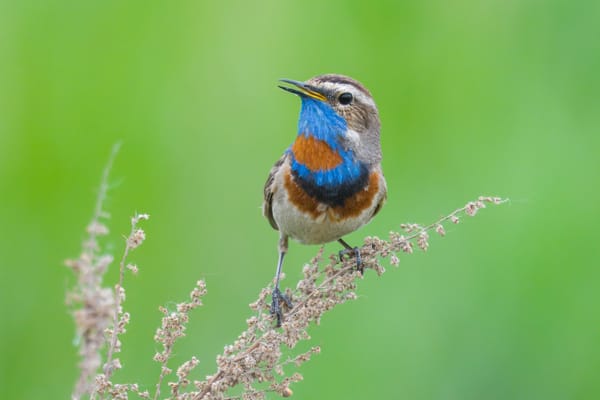
Tracking a Siberian Bluethroat Across Asia
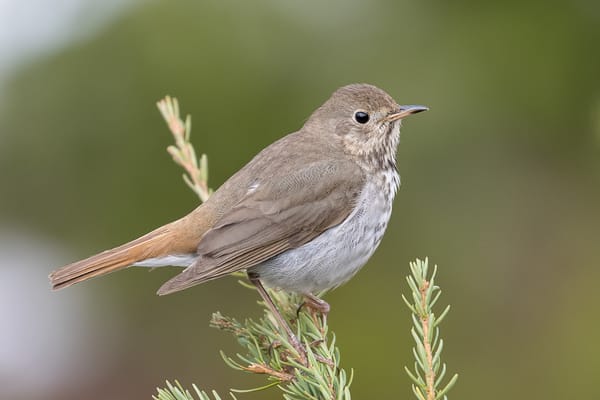
Between Siberia and South Asia, the Red-spotted Bluethroat follows a journey few individuals ever reveal. © Giuseppe Citino

Tracking a Siberian Bluethroat Across Asia


Share this post
American Oystercatchers Take to the Rooftops: A Desperate Response to a Shrinking Coastline
An American Oystercatcher on a gravel rooftop nest shows a precarious adaptation as shrinking shorelines force birds to seek refuge above ground. © Kara Durda, Audubon Florida

American Oystercatchers Take to the Rooftops: A Desperate Response to a Shrinking Coastline

As coastal nesting habitats disappear, American Oystercatchers along Florida’s Gulf Coast are turning to gravel rooftops—an extraordinary but risky adaptation driven by urban expansion and shrinking shorelines.


Abigail McKay

Abigail McKay

Sound-based surveys uncover fine-scale habitat selection in the declining Crested Tit
Forest birds are often assumed to depend primarily on age and maturity, yet fine-scale structure and composition may shape habitat use long before breeding begins. © Steve Roach

Sound-based surveys uncover fine-scale habitat selection in the declining Crested Tit

New research from Finland suggests that Crested Tits respond more to fine-scale forest structure than to forest age in early spring, challenging assumptions about how habitat quality is defined in managed boreal forests.


Gyorgy Szimuly

Gyorgy Szimuly

Choosing Survival: Habitat Shifts in Wintering Taiga Bean Geese
Winter landscapes can appear rich in food, yet a few degrees below zero can render familiar feeding grounds unusable. For Taiga Bean Geese, survival depends on recognising when to abandon frozen pastures and seek alternative refuges. © Lars Petersson

Choosing Survival: Habitat Shifts in Wintering Taiga Bean Geese

When frost locks grasslands out of reach, Taiga Bean Geese turn to winter cereal fields to survive. New research shows how these fields become lifelines during the coldest days of winter.


Gyorgy Szimuly

Gyorgy Szimuly

Bound by Coastlines: Genetics and the Hidden Structure of Mexico’s American Oystercatchers
American Oystercatchers along the coast of north-western Mexico inhabit a landscape shaped by strong site fidelity, where breeding populations remain closely tied to specific bays and shorelines despite their ability to travel long distances.© Rain Saulnier

Bound by Coastlines: Genetics and the Hidden Structure of Mexico’s American Oystercatchers

Genetic evidence from Mexico’s coastlines reveals that American Oystercatchers are far less mobile than they appear, shaped by loyalty to place and hidden evolutionary boundaries.


Gyorgy Szimuly

Gyorgy Szimuly